How to Introduce Your Baby to Peanuts, Eggs, and Other Allergens
On April 5, 2018 by karenUntil recently new parents were told to avoid allergenic foods (such as cow’s milk, eggs and nuts) until baby is at least 12 months old, but now, with the release of prominent research supporting a different approach, these recommendations have changed.
What the Research Says
New evidence-based research studies, like the landmark LEAP (Learning Early About Peanut Allergy), have found that feeding babies allergenic foods often, and early on can help prevent food allergies to those foods from forming.
A study done in 2015 by the New England Journal of Medicine found that babies who ate peanuts before the age of 11 months, were 70-8o% less likely to develop a peanut allergy than babies who were not fed these foods.
“For decades allergists have been recommending that young infants avoid consuming allergenic foods such as peanut to prevent food allergies,” notes Professor Lack, the lead investigator for the LEAP study. “Our findings suggest that this advice was incorrect and may have contributed to the rise in the peanut and other food allergies.” -LEAP Study Results
Numerous other studies (links in references if you want further reading!) have found similar results with other commonly allergenic foods, such as cow’s milk and eggs.
Because of these new findings, the American Academy of Pediatrics (AAP) has recently changed their stance, and currently recommends that parents introduce these foods to babies as early as 6 months of age.
So now, as parents starting solids with our babies, it’s up to us to make a decision. Trust the research and the experts and feed baby these healthy foods to help prevent food allergies. Or, stay cautious and keep to the old recommendations on waiting until after baby is 12 months.
If you’re like me, you’ve probably got a lot of questions. So, let’s break this down, and hopefully it will help clear it up so you can decide what’s right for your family…
What is an Allergen Food?
Food allergies occur when the body has an immune response to an ingredient. A person could be allergic to practically any food, but there are some that are more common than others.
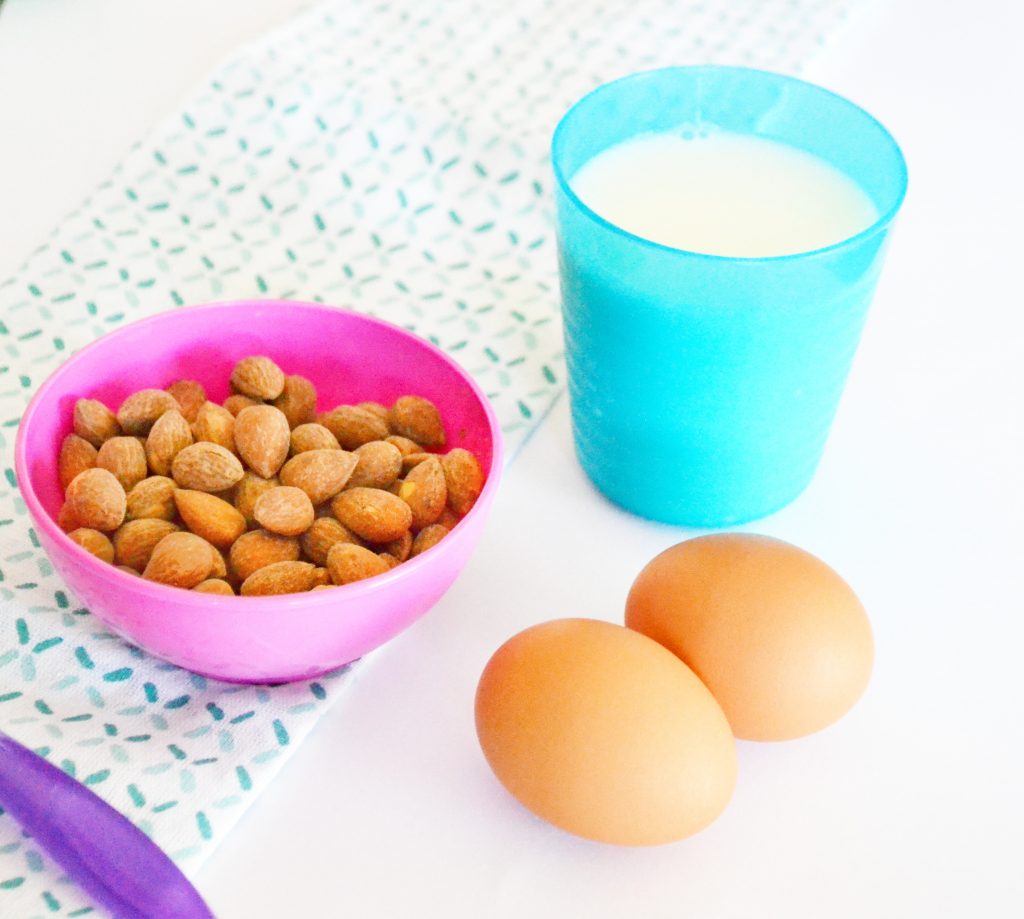
Some of the most common allergenic foods are:
cow’s milk
wheat
egg whites
shellfish
nuts
buckwheat
citrus fruits
Other, less common allergens are:
soy
wheat
fish
Common Allergic Reactions
An allergic reaction to a food can be mild, causing an upset stomach, skin rash, diarrhea, fussiness; or it could be severe and cause difficulty breathing, hives or loss of consciousness. Sometimes it happens immediately upon eating the food, and sometimes is hours later.
If your baby shows any signs of a food allergy, call your doctor, and be sure to write down the foods your baby ate that day, and potential allergy signs. Avoid any new foods (just in case!) until your baby is feeling better. You can find a complete list of the most common signs of food allergies here.
Tips for Introducing Allergenic Foods Safely:
– Talk to your health care professional to run it by them before introducing the food to talk about any allergies in your family
-After your baby’s first few bites, wait for 10 minutes and watch for any negative reaction before continuing. If there is no reaction, try it again in a few days and gradually increase the amount of the food per serving.-
-Make a food allergy chart or use the baby’s food diary in the back of my book to track what foods you’ve given to your baby. This can make it easier to pinpoint the culprit if an allergic reaction does occur.
-Feed your baby the new food at home (not at a friends house, the park or a restaurant), that way if there is a reaction, it’s easier for you to treat it.
Allergenic Foods to Try
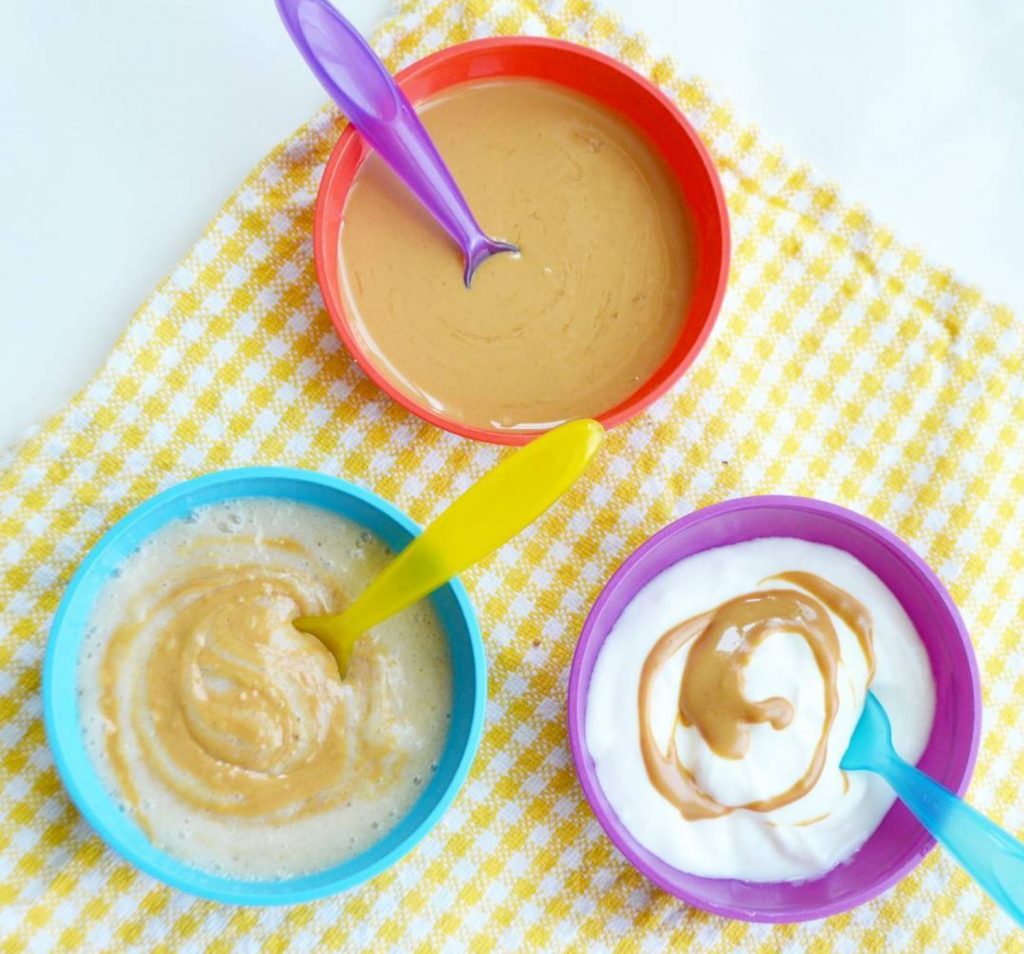
Though not the best first food, peanuts and other highly allergenic foods can be introduced at home starting at about 6 months, after baby has started to eat some other solid food to help reduce the risk of baby developing food allergies. If you have a family history of food allergies or your baby has eczema, you it’s safest to speak with your pediatrician first. They will may want your baby’s first taste to be in the office, or might recommend doing allergy testing first.
Eggs
– Hard-boil and mash up the yolk, adding in some breast milk or formula
– Scramble em’ up and cook in some butter
– Make a 2 ingredient pancakes or baby muffins (perfect for baby led weaning)
Dairy
– plain whole milk yogurt (mix in mashed fruit for some variety)
– whole milk cottage cheese
– shredded, hard cheese (ie. cheddar)
Fish
– Cook salmon, tilapia or trout until well-done, then puree or serve flaked with a fork
– Mix cooked fish with broccoli, cheese, carrots or brown rice
– Make salmon and potato bites (for blw)
Peanuts and Almonds
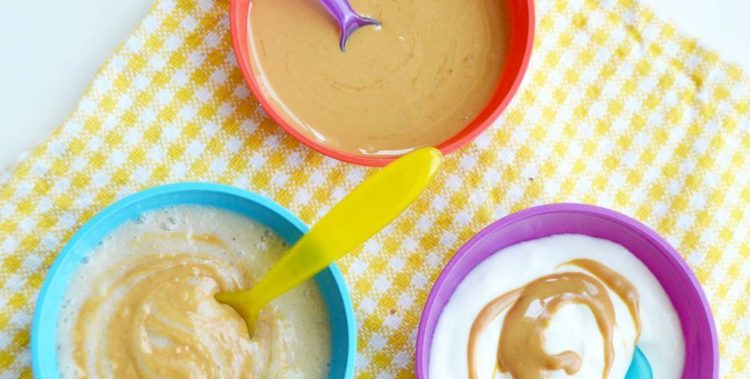
– Make a peanut or almond butter puree by heating up some nut butter (natural, no sugar-added) until melty and then thin with hot water. Cool to room temperature before feeding.
– Stir warm nut butter into a puree (like banana, apple or plain yogurt)
-Make baby muffins, baby pancakes or energy balls (great for baby led weaning) with almond flour
(If you make your own baby food or want to start, there’s loads more recipes using theseingredients and also wheat, soy and nearly any common fruit, veggie, meat/protein or grain in my book! I also post almost daily on my Instagram and Facebook😉)
Are you planning on feeding your baby these foods early on, or wait until after 12 months? I’d love to hear your thoughts on this!
References and Additional Reading
Du Toit G, Roberts G, Sayre PH, et al. Randomized trial of peanut consumption in infants at risk for peanut allergy. N Engl J Med 2015;372:803-813
http://www.nejm.org/doi/10.1056/NEJMoa1414850
http://www.leapstudy.com/leap-study-results#.WsGTiojwZPY
Koplin JJ, Osborne NJ, Wake M, et al. Can early introduction of egg prevent egg allergy in infants? A population-based study. J Allergy Clin Immunol2010;126:807-813
https://www.ncbi.nlm.nih.gov/pubmed/20920771
Katz Y, Rajuan N, Goldberg MR, et al. Early exposure to cow’s milk protein is protective against IgE-mediated cow’s milk protein allergy. J Allergy Clin Immunol 2010;126:77-82.
https://www.ncbi.nlm.nih.gov/pubmed/20541249
Sicherer, Scott H. “New Guidelines Detail Use of ‘Infant-Safe’ Peanut to Prevent Allergy.” AAP
Gateway, 28 Mar. 2018, http://www.aappublications.org/news/2017/01/05/PeanutAllergy010517.
“What Are Food Allergens?” The Allergen Bureau, http://www.allergenbureau.net/food-allergens.

Hello! I am Karen Folcik, a wife, mama, speaker and author of Happy Tummies: A Cookbook for New Mamas. For recipes, tips and more follow me @happytummiescookbook on Instagram, Facebook and Pinterest.